Most Indian banks are past the pilot stage on soundboxes. Fleets now run into the hundreds of thousands, spread across QSR counters, fuel forecourts, pharmacies, and transit points. At that scale, the device stops being the story. What actually decides whether the program runs smoothly or turns into a support nightmare is the platform sitting behind it. A soundbox terminal management system is what lets a bank onboard merchants quickly, push updates without a truck roll, catch failures early, and stay ready for audit.
Before signing the next vendor contract, payments leaders should stop looking at hardware datasheets and start asking harder questions about the platform.
What a Soundbox Terminal Management System Actually Does
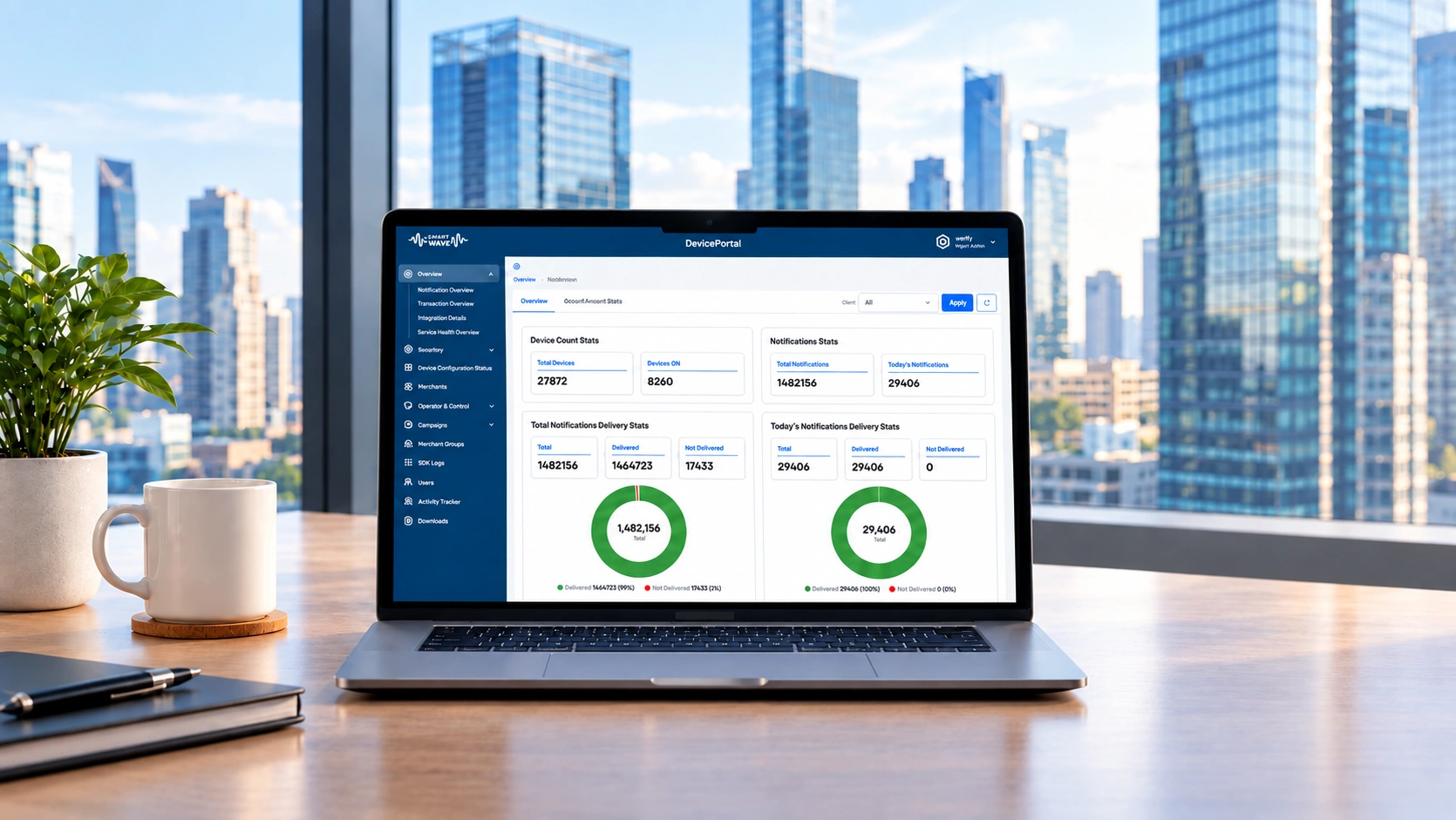
Think of a terminal management system, or TMS, as the mission control for every device in the field. Each soundbox reports back to it. The TMS handles the setup of new devices, firmware and app updates, merchant configurations, key rotations, telemetry, and remote diagnostics. Without one, banks are stuck managing merchant hardware the way people managed old point-of-sale machines in the 1990s, sending someone in person every time something breaks. With a good TMS, a small operations team can look after a fleet a thousand times its size and know exactly what is happening on every unit.
Why TMS Capability Now Decides Vendor Selection
Soundbox economics have moved on. NPCI’s UPI product statistics show monthly transaction volumes running into the many billions, and banks have put acceptance devices into almost every merchant category to keep up. One bad firmware push, a wrong MID setup, or a stalled reconciliation feed can now hit lakhs of merchants overnight. The vendor’s platform is what takes that hit. If it cannot scale, cannot patch remotely, or cannot plug into the bank’s existing acquiring stack cleanly, the whole program becomes a drag no matter how good the hardware looks. That is why remote soundbox management, not device bill of materials, is now the real dividing line in most bank RFPs.Core Capabilities Banks Should Demand
Real-Time Fleet Visibility
Banks should be able to see every device, live. That means battery health, network strength, the last transaction it processed, speaker status, firmware version, and location. Dashboards should let teams slice the fleet by region, acquirer, merchant category, and device age. If a vendor cannot show you the status of any single device in three clicks or less, they are not built for bank-scale merchant device fleet management.
Safe Over-the-Air Updates
Update pipelines need to be signed, rolled out in stages, and reversible. Ask the vendor how they push a critical patch to a hundred thousand devices in a controlled way. Ask what happens when a soundbox OTA update fails halfway. Ask how devices that were offline during the rollout catch up when they come back online. If the answer involves sending someone to the merchant to reflash the device, walk away.
Merchant Lifecycle Controls
Bank operations teams should be able to onboard, pause, reassign, or retire merchants without ever touching the device. KYC status, settlement account changes, and MDR configurations should flow through APIs straight to the endpoint. This is where ToneTag’s edge AI merchant device, eKosha, changes the picture. Because voice interactions and merchant workflows run on the device itself, banks can push conversational updates, new languages, and localised offers without depending on a backend call every single time. It ties into how voice-based payment infrastructure is already being deployed in the field.
Edge AI and On-Device Intelligence
The next wave of bank soundbox deployment is not just about confirming payments. It is about turning the merchant counter into a real banking channel. eKosha is built for exactly this, with the positioning of Banking Beyond Branches – Voice-First for Every MSME. A serious TMS has to handle edge AI properly, which means on-device inferencing, model version control, and secure containerisaltion. Without that, banks cannot deliver credit nudges, insurance prompts, or multilingual support without ripping up their infrastructure every few months. It is the same thinking behind ToneTag’s agentic AI payments stack.
Security and Compliance Non-Negotiables
Banks should judge vendors on end-to-end encryption between device and platform, secure element usage for keys, on-device authentication, tamper detection, and clear data localisation for Indian merchant data. If a vendor claims a specific certification, get it in writing. Do not accept it from a sales deck. The TMS logs are also part of the audit trail. RBI’s Master Directions on Digital Payment Security Controls expect operations at the device layer to be traceable and auditable, and vendors should be able to show log completeness during due diligence, not after go-live. Looking at how proximity payments infrastructure is designed can help acquiring teams frame these questions the right way.
Questions to Put in Every Vendor RFP
You can compress most of the evaluation into a few pointed questions. How does the platform scale past one million active devices without cloud costs blowing up? How quickly can a security patch reach the entire fleet? How are failed devices spotted, replaced, and reconciled in the settlement system? Can it run next to your existing PSP integrations and card acquiring stacks without major changes? And when your developers integrate the onboarding APIs, does it feel modern or does it feel like 2014? A soundbox vendor for banks that answers these with evidence, not slides, is worth shortlisting.
Building a Program That Ages Well
Soundboxes are turning into full merchant channels for credit, collections, insurance, and loyalty. The banks that pick their vendor based on TMS depth, edge intelligence, and clean integration paths will be able to launch new products at the counter without rewiring anything. The ones that chase the lowest device price usually end up rebuilding the whole program within two years. Looking at real deployments like ToneTag’s RetailPod stories gives acquiring teams a useful reference for what a mature program actually looks like in production.
If your team is planning the next merchant device rollout, the useful conversations are not about speaker volume or battery size. They are about the platform behind the fleet. Take a look at how ToneTag’s hardware product line is built for bank-grade scale, and talk to the team to see how the TMS fits into your acquiring stack. When the platform is right, the fleet mostly runs itself.
Frequently Asked Questions
What Is a Soundbox Terminal Management System?
A soundbox terminal management system is the backend platform banks use to run large fleets of merchant devices remotely. It looks after device setup, firmware updates, merchant onboarding, key rotation, telemetry, and health monitoring across every unit in the field. Without a strong TMS, banks end up sending people out to fix, configure, or upgrade devices in person, which stops working past a few thousand units. A good TMS turns a scattered fleet into something a small team can actually manage, and it shapes uptime, security posture, merchant experience, and the total cost of running the program.
Why Should Banks Prioritise TMS Capability Over Hardware Specs?
The hardware gap between soundboxes has closed. Most devices now handle UPI confirmation, multilingual audio, and basic connectivity well enough. The real difference sits in the management layer, where patching speed, integration with acquiring systems, remote diagnostics, and scalability separate proper vendors from resellers. Focusing on TMS capability protects the merchant experience, keeps field service under control, and keeps the program in line with evolving RBI and NPCI expectations.
How Does Edge AI Change Soundbox Terminal Management?
Edge AI shifts intelligence from the cloud to the device itself, which changes what the TMS has to handle. Instead of just pushing firmware, it now has to manage on-device models, language packs, and inference logic. ToneTag’s eKosha is built around this idea, letting banks deliver conversational banking and merchant workflows at the counter without constantly calling the cloud. For the TMS, that means secure model deployment, version rollback, containerisation, and telemetry on how the models are actually performing. Banks picking a vendor today should check that the platform was built for edge AI, not bolted on afterwards.
What Security Features Should Banks Demand From a Soundbox TMS Vendor?
Ask for end-to-end encryption between device and platform, secure element storage for keys, on-device authentication, tamper detection, and signed over-the-air updates with staged rollout and rollback. Data localisation for Indian merchant data, complete audit logs, and role-based access for bank operations teams should also be standard. Any specific certification claims from the vendor need to be verified in writing, not taken from marketing material. RBI’s master directions on digital payment security controls set a useful floor, and the vendor should be able to show compliance during commercial due diligence, not later.
Can a Soundbox TMS Integrate With Existing Bank Acquiring Systems?
Yes, a well-built soundbox TMS is designed to slot into existing acquiring stacks through APIs and event streams, not to force a rebuild. It should push transaction confirmations, device status, and merchant lifecycle events into the bank’s core acquiring platform, PSP integrations, settlement engines, and reporting systems. Integration effort matters, because heavy customisation stretches time to market and pushes up program cost. Banks should ask for reference implementations, sandbox access, and clear developer documentation before signing anything, so the integration risk is properly understood before the contract is on the table.