What Agentic AI in Payments Actually Means
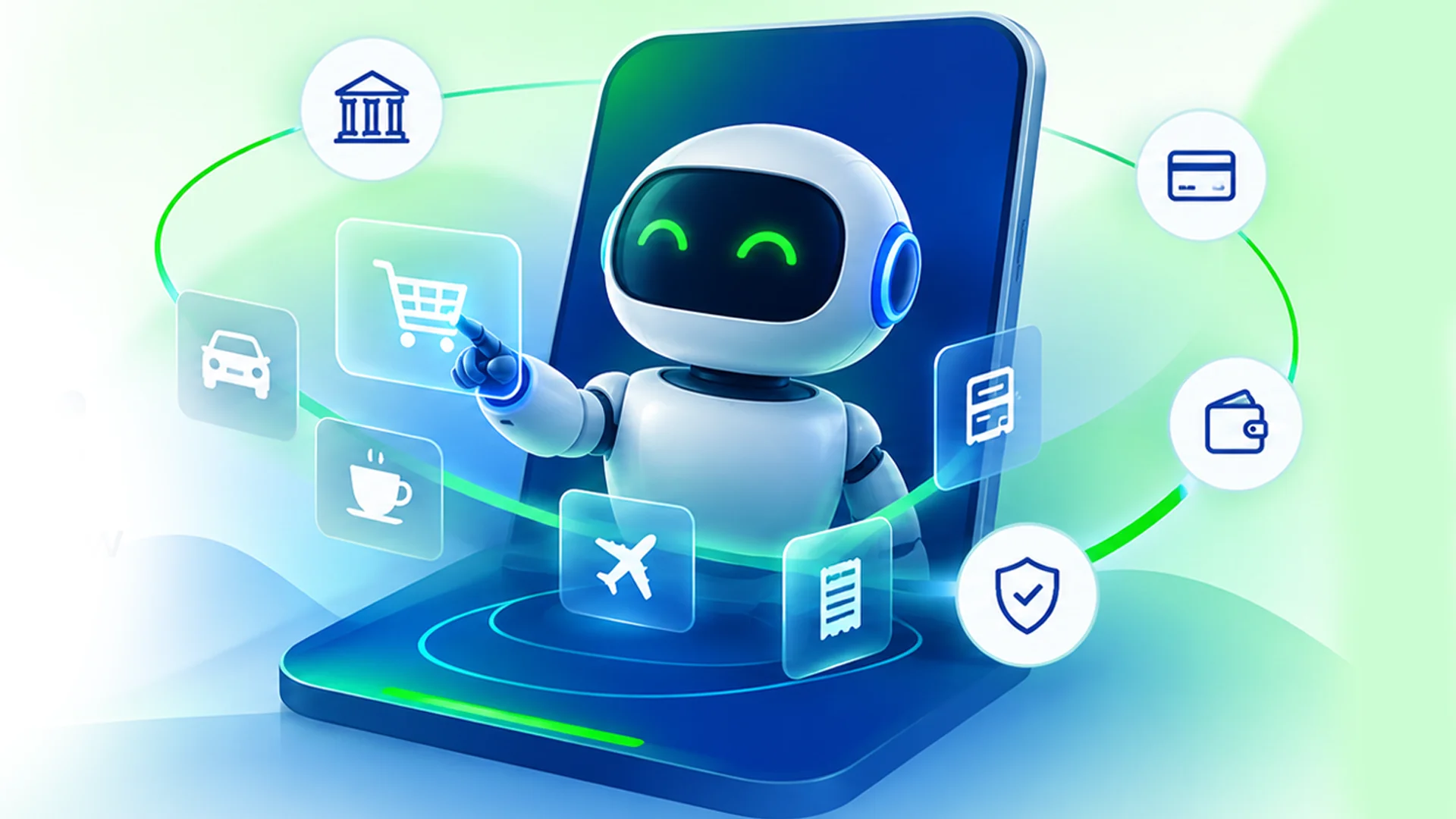
Agentic AI refers to systems that interpret a goal, take multi-step actions, and complete outcomes with limited human oversight. In a payments context, that outcome is a settled transaction. Traditional rails, from cards to UPI, were designed for a human tap or scan. Agentic flows compress that journey. The user states an intent, something like “pay for parking” or “renew my prepaid plan”, and an authenticated agent evaluates the request, confirms the merchant, applies limits, and triggers settlement.
The IMF, in an April 2026 note on how agentic AI will reshape payments, describes agents extending well beyond checkout into post-purchase functions such as returns, disputes, and adaptive pricing. That widening scope is why banks and fintechs need to plan for agents as a first-class transaction initiator, not a novelty layer.
How Autonomous Transactions Actually Work
An autonomous transaction typically moves through four checkpoints: intent capture, identity verification, authorization, and settlement. The agent captures intent through voice, chat, or contextual signals like location and past behaviour. It then verifies that the person making the request is authorized to spend, usually through device binding, biometrics, or a short voice or PIN challenge. Once authorization is confirmed, the agent applies pre-set spend limits and mandates, then routes the transaction through an existing rail such as UPI, a card network, or a wallet.
The ToneTag protocol is built around this exact flow. Its agentic AI payments infrastructure lets voice assistants, chatbots, kiosks, and in-vehicle systems authenticate and complete conversational payments through a single integration, without asking the user to jump into an app. The result is a checkout that behaves less like a form and more like a spoken exchange.
Why Banks and Fintechs Cannot Afford to Wait
The commercial pull is real. Analyst estimates cited across industry coverage suggest agentic commerce could redirect several trillion dollars of global retail spend by 2030, with Gartner projecting that roughly one-third of enterprise applications will embed agentic AI by 2028. India is moving on a parallel track. Business Standard reported in July 2026 that NPCI is developing a Unified Agent Protocol to formalize how trusted AI agents can transact on UPI, positioning the country among the first with national-scale infrastructure for agent-led payments.
For product and payments leaders, the risk of waiting is competitive as much as regulatory. Every quarter without an agentic strategy is a quarter of intent captured by whichever app, assistant, or device speaks to the customer first. Autonomous payment infrastructure is fast becoming table stakes for retention.
What Changes in the Payments Stack
Adding agents to a payments stack is less about ripping out the rails and more about reshaping the edges. Three shifts matter most.
First, authentication moves closer to the device. On-device biometrics, secure elements, and voice identity replace the assumption that a user will unlock a phone and tap a button. Second, orchestration becomes context-aware. The system reads location, time, prior behaviour, and stated intent to decide what to authorize and when. Third, integration effort has to stay low. Ripping and replacing a core stack is a non-starter for most banks and acquirers.
An SDK-first approach solves the third problem. The ToneTag developer resources let engineering teams add agentic and conversational capabilities on top of existing card, UPI, and wallet flows, cutting rollout timelines from quarters to weeks.
Where This Shows up in the Real World
Agentic payments are already visible in narrow, high-frequency use cases. A driver at a fuel forecourt authorizes a top-up by voice while staying seated. A retailer using eKosha, ToneTag’s voice-first merchant device built around the promise of Banking Beyond Branches for every MSME, reconciles the day’s collections through a spoken query instead of a printed statement. A subscription platform triggers a monthly refill through an agent after a customer says “same order again” to a smart speaker. A parking gate confirms exit and charges a linked account without a QR scan.
Adjacent to voice, proximity payments and IoT payments extend agentic behaviour to cars, wearables, kiosks, and connected appliances, giving banks and networks a way to place their brand at points where cards and apps were never designed to reach.
Risk, Consent, and Governance
The hardest part of autonomous transactions is not the technology. It is trust. Every serious rollout has to answer three questions. What spend limits apply per agent, per merchant, and per session? How is user consent recorded and revoked? And when a transaction goes wrong, who can prove what the agent was told and what it decided?
Regulators are converging on similar answers. Auditable mandates, per-agent authorization, on-device authentication that reduces cloud exposure, and traceable logs are becoming baseline expectations. The ToneTag protocol emphasizes on-device authentication and local data handling as design defaults, which product teams should map against their own compliance frameworks before rollout.
The Road Ahead for Banks and Fintechs
Agentic payments will not replace apps and cards overnight, but they will absorb a growing share of intent, especially in India, where a voice commerce platform India ecosystem is being built directly on UPI and adjacent rails. Banks and fintechs that begin integrating conversational, autonomous flows now will own the moment a customer decides to buy, whether that moment happens in a car, at a counter, or inside a chat window. To evaluate a fit with your stack, talk to the ToneTag team or explore recent thinking on voice and sound-based payments in the ToneTag blog. eKosha is already showing what an agent-ready, voice-first layer looks like in production for merchants on the ground.
Frequently Asked Questions
What are agentic AI payments and how are they different from regular digital payments?
Agentic AI payments are transactions completed by an AI agent on the user’s behalf, based on a stated goal rather than a manual tap or scan. Regular digital payments, including UPI or card checkouts, still assume a human presses buttons at each step. Agentic flows compress intent capture, identity verification, authorization, and settlement into a single conversational or contextual exchange. The user says or signals what they want, and the agent handles routing, limits, and confirmation. For banks and fintechs, this reframes payments from a screen-driven event to a background outcome triggered by trusted software.
Can AI agents make payments on UPI in India today?
Agent-initiated UPI transactions are moving from experiments to formal infrastructure. NPCI is developing a Unified Agent Protocol to define how trusted AI agents can authenticate and transact on UPI, according to Business Standard reporting in July 2026. Voice-based UPI flows through Hello UPI and conversational payments are already live in Hindi and English, and IoT and feature-phone integrations continue to expand. Banks, fintechs, and PSPs building on protocols like ToneTag’s can layer agentic capabilities on their existing UPI stack today, while national standards for autonomous UPI transactions are finalised.
How do banks and fintechs integrate agentic AI payment solutions without rebuilding their core stack?
Most integrations rely on an SDK and API layer that sits on top of existing card, UPI, and wallet rails, not a rip-and-replace of the core banking or switch. A protocol-led approach adds intent capture, on-device authentication, and agent orchestration as modular components. Engineering teams typically start with a narrow use case, such as voice top-ups, in-car payments, or agent-driven subscription renewals, then expand. ToneTag’s developer resources are designed for this pattern, letting product and engineering leaders launch agentic and conversational payment flows in weeks rather than quarters, with minimal disruption to compliance reviews.
Are autonomous voice-led transactions secure enough for regulated financial services
Security depends on how the flow is designed, not on the channel itself. Well-built agentic payments use on-device biometrics, secure elements, voice identity, and encrypted local data handling to keep sensitive information off the network. Spend limits, per-agent mandates, and auditable consent logs give banks and regulators a clear trail if a transaction is disputed. The ToneTag protocol is built around these principles, with authentication and processing pushed to the edge. Any specific certification claims, including references to industry security standards, should be verified with the vendor before publication or procurement.
What role does a device like eKosha play in the shift to agentic and conversational payments?
eKosha is ToneTag’s voice-first merchant device positioned around the anchor of Banking Beyond Branches for every MSME. It brings conversational, agent-ready payment and banking capabilities directly to the countertop, letting small merchants query balances, reconcile collections, and confirm settlements through speech rather than screens. For banks and fintechs, eKosha acts as a distribution channel that pushes agentic AI payment experiences into segments that were previously out of reach because of low smartphone comfort, limited connectivity, or vernacular language needs. It is a working example of agentic infrastructure in production.