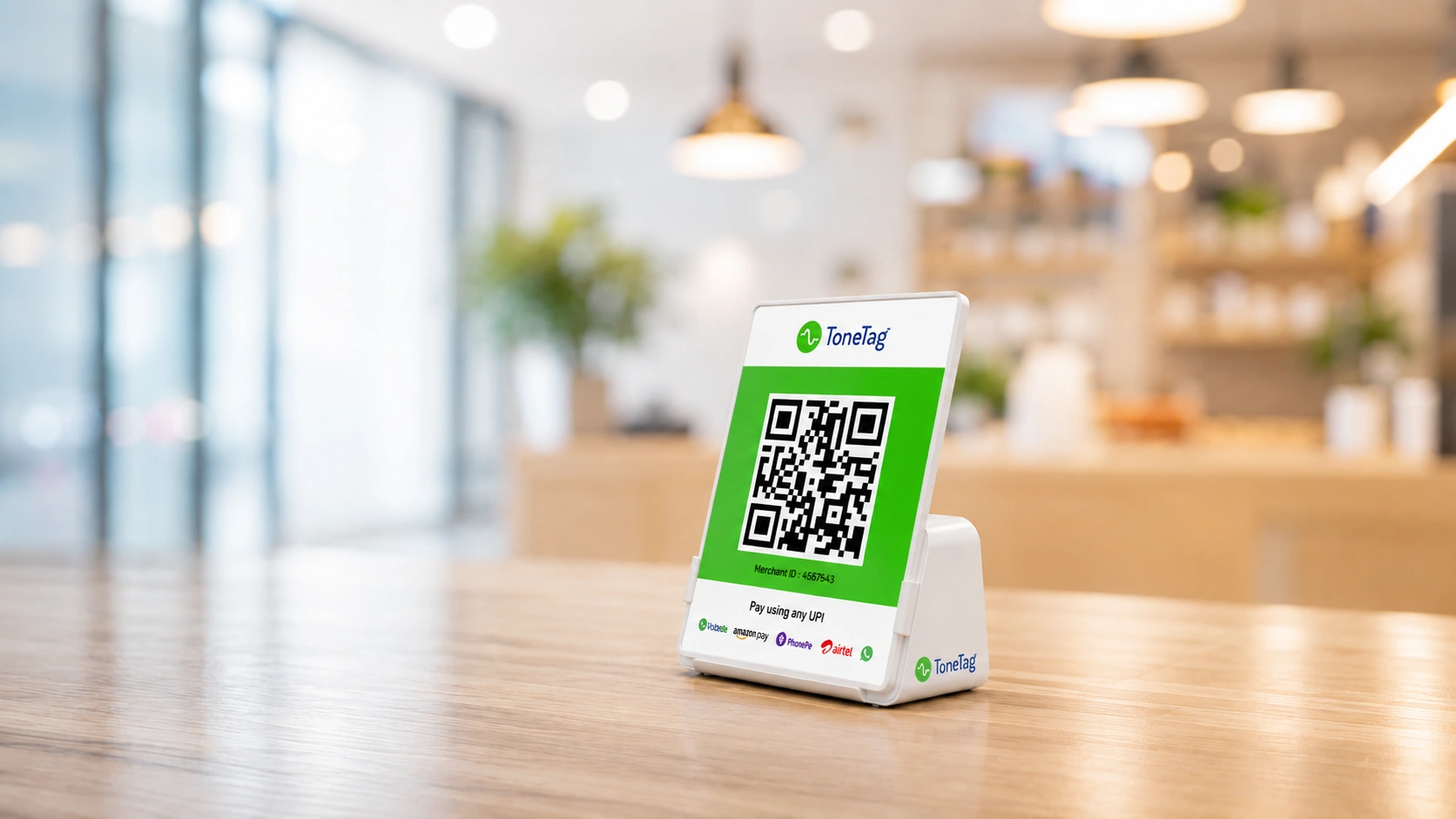
For banks, PSPs, and fintechs scaling offline merchant acceptance in India, the soundbox has moved from a novelty into a core distribution asset. An NPCI and BCG study released at GFF 2025 noted that UPI now reaches 65 million merchants, with eight in ten citing productivity gains from voice-alert payment devices. Yet most acquirers still buy off-the-shelf hardware that lacks differentiation, on-device intelligence, and long-term IP ownership. That gap is where a protocol-led hardware partner matters.
ToneTag designs, manufactures, and supplies custom payment devices for banks, PSPs, and fintechs, owning the sound protocol, edge compute layer, and remote management stack that every device rides on.
Why Banks and Fintechs Are Rethinking Their Device Supplier
For many years, soundbox procurement was driven by familiar considerations such as cost, deployment timelines, and hardware availability. As payment acceptance networks have grown, however, the role of the device has expanded beyond transaction confirmation. Today’s payment devices are expected to support evolving software capabilities, remote fleet management, stronger security, and a consistent merchant experience across large deployments.
This shift is changing how banks and fintechs evaluate OEM partners. Alongside manufacturing scale, organizations are increasingly looking at factors such as firmware ownership, long-term product roadmaps, customization, and the ability to manage devices throughout their lifecycle. As soundboxes become a strategic touchpoint for merchant engagement and payment innovation, selecting an OEM is no longer just a procurement decision, it’s a technology partnership that influences how quickly new capabilities can be delivered to the field.
How ToneTag Builds Custom Payment Devices
As an IP-owning UPI soundbox manufacturer, ToneTag ships payment acceptance devices engineered from the protocol up rather than rebadged reference designs. Every node starts with the ToneTag sound protocol and an analog edge-compute architecture that processes core transaction logic on the device itself, not in the cloud. This reduces server round-trips, cuts operating cost per transaction, and lets the device confirm payments reliably in low-connectivity retail environments where signal drops are common.
The build process is modular. Banks and fintechs specify form factor, connectivity (2G, 4G, Wi-Fi), display, battery profile, and language stack. ToneTag maps those to its reference architecture and on-device authentication, and packages the firmware with an OTA-ready device management system. Because ToneTag owns the underlying IP for both hardware and software, partners get faster feature turnaround, cleaner audit trails, and a roadmap that can align with their own product cycles. The hardware stack is documented on the ToneTag Hardware Product page, and the underlying acceptance layer sits under Proximity Payments.
The Technology Stack Behind Every Soundbox
Three layers separate a ToneTag payment device from a generic soundbox in the market, and together they explain why the device behaves the way it does in the field:
- The sound protocol, which enables data over sound and continues working even when QR scanning or network signal falters. This is explored in our note on voice-based versus traditional payments.
- The analog edge processor, which handles session security, authentication, and payment confirmation locally rather than routing every step through the cloud.
- The device management system, which lets an issuer push firmware, language packs, and merchant campaigns to lakhs of devices from a single console.
Enterprise Deployment at Scale
Volume economics matter for any acquirer running a national deployment. ToneTag’s soundbox enterprise grade deployment program is structured around committed volumes, staggered delivery windows, and SLA-backed after-sales support. Manufacturing is set up for scale, so partners can plan phased rollouts across regions without renegotiating unit economics every quarter or absorbing hidden costs late in the program.
For platforms that prefer to reach merchants through partners rather than direct field teams, Integration paths for both direct and partner-led rollouts are covered on the Developer portal.
Beyond Payment Confirmations: The Edge AI Evolution
The next phase of merchant hardware is not louder voice alerts. It is on-device intelligence that turns each counter into a full banking touchpoint. This is where eKosha fits. Built on the same protocol and edge stack that powers ToneTag’s device portfolio, eKosha is a voice-first business assistant that lets banks deliver credit, deposits, servicing, and merchant queries in local languages at the point of business, without new field infrastructure. Its positioning is direct: Banking Beyond Branches, Voice-First for Every MSME.
For an issuer, eKosha extends the economic case for hardware from payment acceptance to full merchant banking. It confirms UPI and CBDC transactions in real time, runs conversational workflows in Indian languages, surfaces personalised offers, and captures merchant intent data that a cloud-only unit cannot. Inc42 has reported that NPCI is preparing a unified soundbox infrastructure so a single device can serve all UPI apps, which will further commoditise basic voice alerts. In that shift, IP-owned edge devices like eKosha become the higher-value layer that partners can defend on, drawing on the authentication principles covered in our Pay with Voice guide.
Building Your Device Program with ToneTag
Choosing an OEM partner today is a decision about the next five years of your merchant book. Banks and fintechs looking to move past commoditised hardware can talk to the ToneTag team to scope a custom device program with the protocol, silicon logic, and management stack shipped as one integrated build. Partners keep control of the merchant surface while unlocking new revenue, data, and engagement streams that off-the-shelf soundboxes cannot deliver.
Frequently Asked Questions
What should banks look for in a soundbox OEM manufacturer in India?
Banks should look beyond unit price. The right partner should own the underlying protocol, hardware IP, and firmware roadmap rather than assembling reference designs shared across competing brands. Evaluate the on-device security posture, remote device management capability, language coverage, and how well the OEM integrates with UPI, CBDC, and card rails. Also look at rollout depth in low-connectivity geographies and the OEM’s ability to evolve the device from a payment confirmation tool into a broader engagement surface. ToneTag ships the protocol, edge stack, and DMS as one integrated build purpose-designed for regulated issuers.
How does ToneTag differ from a generic UPI soundbox manufacturer?
Most vendors in the category assemble reference boards from third-party chip designers, then integrate a cloud service that confirms payments over 4G. ToneTag owns the sound protocol, the analog edge-compute layer, and the device management stack. That means transaction logic runs on the device itself, not the cloud, which improves reliability in weak-signal locations and lowers per-transaction infrastructure cost. It also lets partners request custom firmware, roll out OTA updates at scale, and evolve the device roadmap in step with their own product priorities, rather than waiting on an external vendor’s release cycle.
Can ToneTag support bulk supply for national deployments?
Yes. ToneTag structures volume programs around committed order sizes, staggered delivery, and SLA-backed after-sales support, which lets acquirers run phased national rollouts without renegotiating economics every quarter. The manufacturing setup is designed for scale, and the device management console lets an issuer provision, monitor, and update lakhs of units from a single interface. Banks and PSPs can align delivery schedules with their merchant onboarding waves, which reduces field team idle time and improves activation rates in the first ninety days after deployment.
Is eKosha a replacement for a standard payment device, and where does it fit for banks?
eKosha is not a replacement for a basic payment confirmation device. It is a voice-first business assistant designed for banks that want to deliver merchant banking services, credit conversations, and language-native support directly at the counter, without a new app rollout. Because it runs on ToneTag’s analog edge-compute stack, it works in low-connectivity locations and keeps sensitive processing on the device. For issuers, eKosha is the natural upgrade path when a device is expected to do more than confirm payments and start driving merchant lifetime value.